Behavior problems in dogs

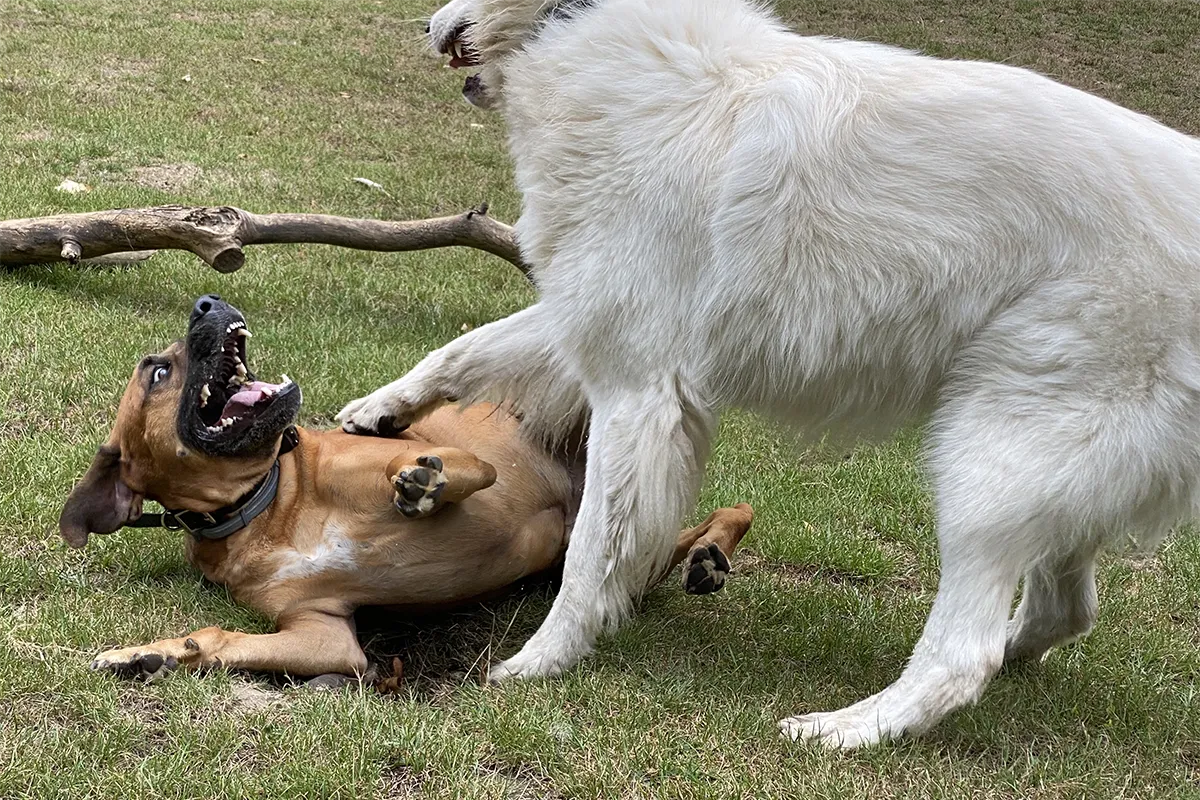
Does your dog pull on the leash, listen only when he feels like it, jump on everyone, bark, chew or nip? Whatever a dog's behavior, it has an origin and a purpose in his environment. From puppy to senior, a dog showing a behavior problem is trying, in his own way, to tell us something. I come to your home in Walloon Brabant and Brussels to help you understand what is going on and find concrete solutions.

Common behavior problems in dogs

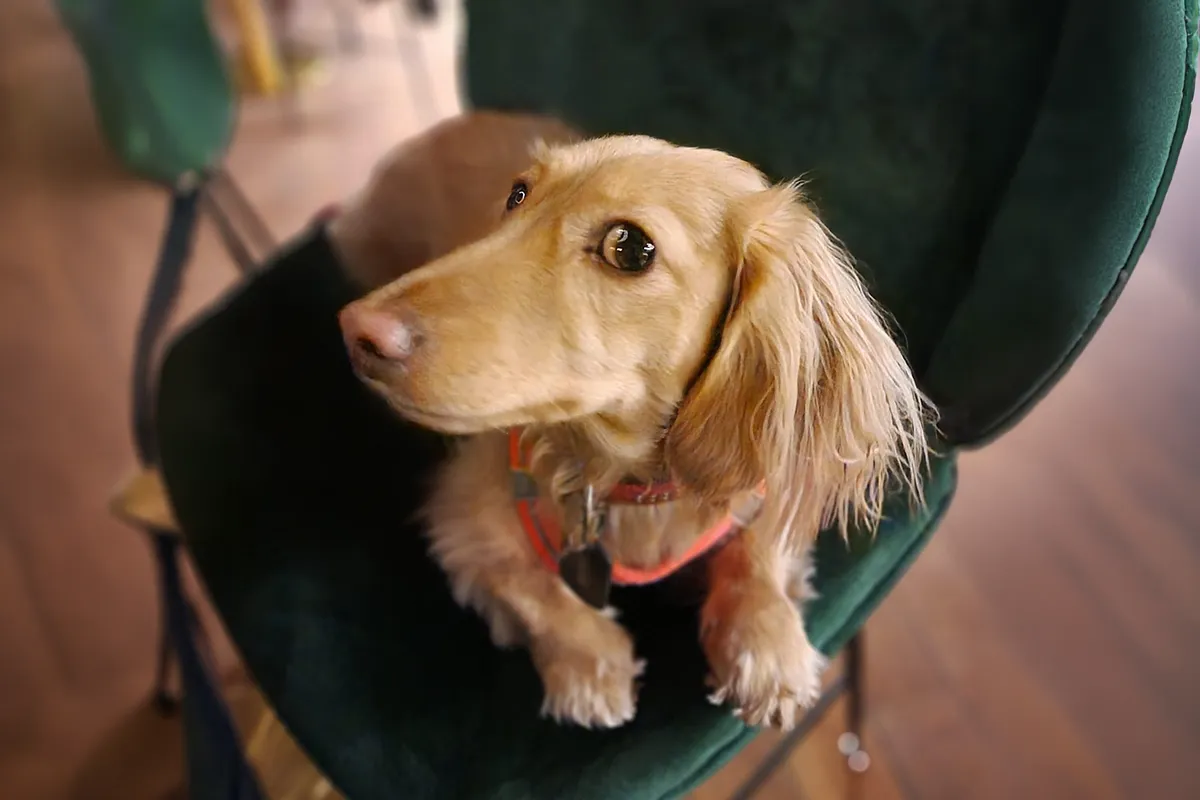
A dog has no notion of right or wrong: he expresses himself through barking, body posture and eye contact, where we mostly use our voice. Most behavior problems stem from our inability to read these signals — which mean “I'm scared”, “I'm in pain”, “I don't want to be left alone”, “help me” — rather than from any desire to "take the upper hand".

Most of the problems I see every day are not spectacular, but they wear owners down and damage the relationship with their dog. Aggression, separation anxiety, hyperactivity, destructive behavior: they affect dogs of all ages, whatever their breed or the training they have received.

Leash walking and recall

Pulling, zigzagging, refusing to come back when called: these difficulties make walks unpleasant and can become dangerous. They are corrected with gradual exercises tailored to your dog's profile.

Nipping and jumping up

Normal in puppies, nipping and jumping up are very easy to redirect. In adult dogs, they often reflect a lack of positive training or a natural burst of affection: jumping on you is his way of celebrating you, of wanting to be as close as possible. These are behaviors we learn to channel with the right advice, sprinkled with play.

Destructive behavior and excessive barking

Chewed furniture, destroyed objects, non-stop barking: these symptoms most often reflect play, boredom, a lack of stimulation, stress or underlying anxiety. A dog does not behave this way to “get back at you”, as people sometimes think. Addressing the cause is usually enough to make them disappear.

Hyperactivity and hypersensitivity

A dog who cannot settle, ignores cues or overreacts to stimuli may be suffering from hyperactivity or hypersensitivity. This hyperactivity often goes hand in hand with a glaring lack of fulfillment of the dog's fundamental needs: not only physical, but also social and cognitive.

House soiling

A house-trained dog who starts relieving himself indoors again is not trying to punish you: it is often a sign of anxiety, stress or a medical problem. This behavior deserves to be taken seriously, not punished.

Lack of attention and ignored cues

Does your dog ignore you, no longer respond to cues he knows, or seem to be "doing it on purpose"? These behaviors often reflect a lack of motivation, an overstimulating environment or a bond that hasn't been built strongly enough.
Contact me

How does the support work?

Every case starts at your place or outdoors, wherever the problems actually occur. I observe your dog in his environment, listen to what you have been through, and identify the triggers of the behavior. On that basis, I build a protocol suited to your dog and your daily life: not a generic recipe, but a concrete answer to a real situation.
01

First contact
Free

We talk by phone or in writing: you describe your dog's situation, his living environment and what you expect. No commitment.
02

Behavior assessment
€95

I come to your home. I observe your dog in his environment, gather his history and analyze what is going on between you. Concrete advice you can apply that very evening.
03

Personalized management and training plan
€65
(optional but very useful!)

I give you a detailed consultation report: observations of your dog and his environment, his background, a description of the problem and how to overcome it. I then build a tailor-made protocol, adapted to your dog's profile and your pace of life. Every exercise is explained and justified, and I include a selection of scientific publications and reading on the issue at hand to help you further.
04

Follow-up
Free

A 15-minute call is offered within 2 weeks of the consultation to take stock.

Specific problems: when should you see a dog behaviorist?

Some behaviors go beyond the scope of standard training and require in-depth behavioral support. Here are the situations that receive dedicated support at The Dog Nanny Academy.

Separation anxiety

Separation anxiety is one of the most widespread problems in dogs. An anxious dog who cannot cope with being alone may develop destructive behavior, continuous barking or physical signs of distress. In the vast majority of cases, a gradual behavior protocol restores lasting balance.
Learn more →

Reactivity

A reactive dog explodes at certain stimuli: other dogs, strangers, bikes, sudden noises. These reactions, on leash or at home, can become uncontrollable without appropriate support. Reactivity is treated through gradual desensitization and work on the dog's threshold.
Learn more →

Aggression

Aggression — growling, pre-emptive bites, so-called “dominance and submission behaviors” — is rooted in fear, pain or trauma. It does not go away on its own and may get worse if ignored or punished. A behavior assessment identifies its cause and allows an appropriate treatment plan to be put in place, together with a veterinarian if necessary.
Learn more →

FAQ

A sudden change in behavior may have a medical origin. An illness, pain or a developmental issue can profoundly alter an animal's behavior. I always recommend a veterinary consultation first, before starting any dog behaviorism support.

Yes, in the vast majority of cases. Puppies respond faster, but an adult or senior dog remains fully capable of learning and changing his habits with the right support.
A trainer works on useful basic skills: sit, down, recall, leash walking, wait, drop it, leave it, stay, among others. A behaviorist steps in when a problem has set in. The two approaches are complementary and address different situations in a dog's life.
It depends on the problem, how long it has been going on, and the owners' day-to-day involvement. Some cases improve from the very first session; others require follow-up over several weeks.
A safe space, a stable routine, suitable mental activities and reducing anxiety-inducing stimuli are among the recommendations I give at every consultation. The family environment plays a central role in the animal's well-being.

When should you consult?

See a dog behaviorist if your dog shows signs of aggression towards people or other animals, if his condition is getting worse despite your efforts, or if a problem has lasted more than 2 to 3 weeks without improvement. A prior veterinary check-up is always recommended to rule out an underlying illness or pain.
Your dog is sending you signals. 
Let's learn to understand them together.
arrow-upplus-circle