
Puppy training in Brussels and Walloon Brabant

Your puppy has just arrived and already everything is a discovery: the stairs, the front door, the first cat spotted on a walk, a door slamming, the washing machine, the vacuum cleaner, children shouting, different floors, sounds and smells. These first weeks shape his mind and personality for his whole adult life: his confidence, his sociability, his everyday habits.
I support you from the moment you plan to adopt a dog right through to his arrival home, at your place and online, to lay solid, calm foundations from day one. The earlier you start, the faster your puppy progresses.
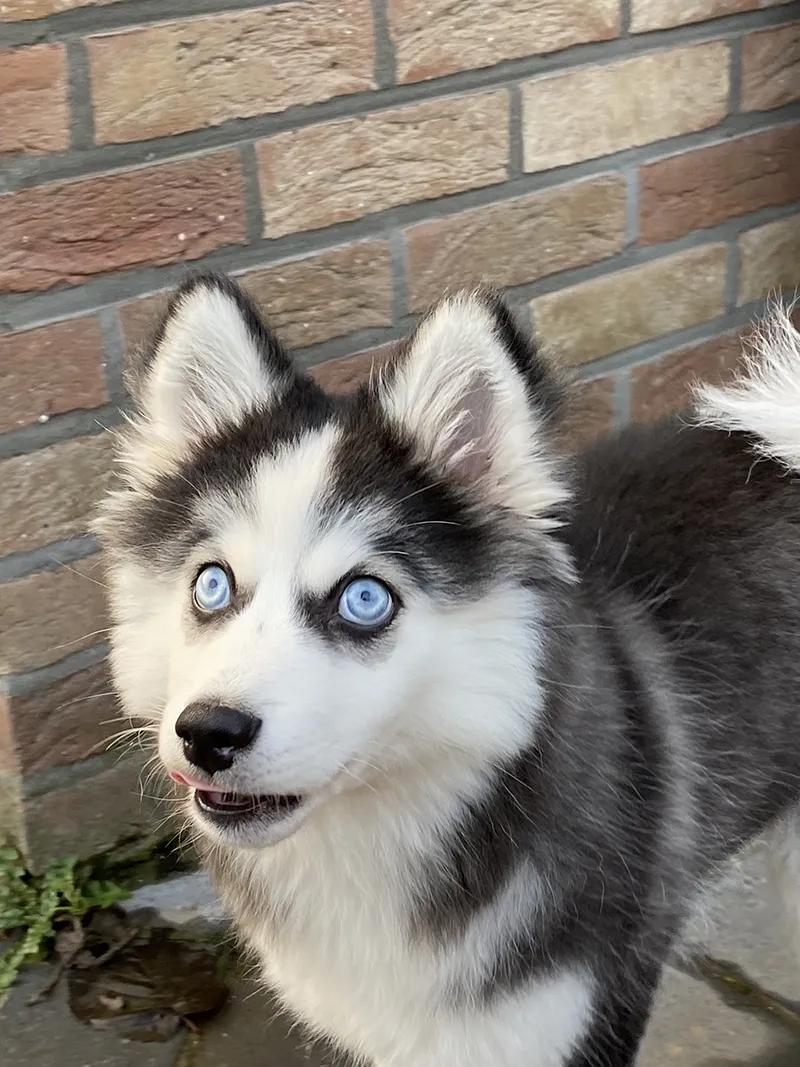
Portrait d'un husky aux yeux bleus devant un mur de briques

A key period in puppy development

From birth until 12 to 16 weeks, a puppy goes through a decisive socialization period: he discovers the world with curiosity and records every experience. Some puppies are bold, others more timid: I respect each companion's temperament and pace to build his confidence gently.

Understanding your puppy's behavior lets you anticipate his needs early: safety, a comfortable sleeping area and stable landmarks. It is also during these first weeks that the relationship between a puppy and his owner(s) is built.

Socialization, house training and first skills

Three areas structure my support during this period, always adapted to your puppy's pace and personality.

Socialization, a lesson for life

A well-socialized puppy adapts calmly to other dogs, to children, to the noises of the city as well as the countryside. 

I offer gradual exercises, guided walks and carefully chosen real-life situations to get your puppy used to this human-made world, at his own pace and with full confidence.

House training, step by step

House training a puppy takes consistency, not severity. It is important to understand that a puppy walks around like a baby without a diaper. You don't punish the baby, you guide him; the same goes for the puppy. 

I show you how to spot the signals before the accident, set up a well-regulated schedule, and reward him at the right moment and in the right way.

The first everyday skills

Before any first safety skill — to be introduced gently and at the puppy's pace — I explain everything a dog needs: bonding, activities, socialization, but also plenty of rest! Learning starts at around 3 months of age: sit, down, recall, leash walking, managing typical puppy “mischief” such as nipping, chewing, and so on. Positive training gives your puppy clear, reassuring guidelines for everyone's safety. Your puppy learns at his own pace, with short exercises suited to his age: you learn together, a few minutes every day.
Contact me

How does the support work?

01

First contact
Free

We talk by phone or in writing: you describe your dog's situation, his living environment and what you expect. No commitment.
02

Dog training session
€85

I come to your home. In 1 hour, I teach you the basic skills, such as sit, down, stay, and so on. Two or three sessions are generally enough to train a dog.
03

Post-session follow-up
Free

A 15-minute call is offered within 2 weeks of the consultation.

Frequently asked questions about puppy training

Generally at 12 weeks. Before that, the brain is not yet ready and, above all, from the moment he arrives at your place, the priority is to encourage him to discover his environment, indoors and out. That is the ideal time to start socialization and first skills, while the puppy is at his most receptive.

By setting up a routine: trips outside after every meal and every nap, spotting the signals that precede elimination, and verbal praise at the right moment. With consistency, most puppies are house trained within a few weeks. You simply need to observe your puppy to anticipate when he needs to go.

Through gradual, supervised encounters, always at your puppy's pace. I guide you in choosing the right tempo for his temperament. If you are a parent, it is crucial never to let your child pet a puppy without the owner's consent.

There is a huge range of puppy treats: small, tasty, easy-to-swallow treats reserved for training sessions. Some puppies respond to other rewards: a tone of voice, a cuddle, a toy. Every puppy has his preferences; we identify them together.

A puppy stays focused for 5 to 10 minutes. After that, he gets tired and stops taking in what you say, which can undo the short session that came before. A few minutes are enough. Between exercises, I explain more about what we are practicing. I give you short exercises to repeat twice a day. Always end on a successful exercise and a little play session, to build your puppy's confidence.

By respecting his pace and letting him observe what intrigues him, decide whether or not to interact, and have the option to walk away from a situation that worries him. Never force a dog: it can break the trust he has in you and in himself, and make him reactive because he feels trapped.

Depending on breed and size, between 12 and 24 months. The foundations laid in the first months stay with him throughout his adult life, as long as all of his needs continue to be met.

You are your puppy's main point of reference. My role is to give you the keys so that the relationship between puppy and owner is built on trust.

Welcoming him home, socialization, house training, understanding his needs, then first skills through positive training: these are the main steps to training a puppy calmly, each at his own pace.

I work exclusively through private lessons at your place, for tailor-made support. I also offer theme walks in small groups, ideal for meeting other dogs and owners, or for putting into practice the advice you received during a consultation.

My positive training method for puppies

At The Dog Nanny Academy, every session is a private lesson given at your place or online, tailor-made to your puppy's age, temperament and needs. I am a certified dog trainer and behaviorist, and a professional member of recognized animal welfare organizations.

My approach favors play and rewards, with concrete advice to apply every day so that this young companion grows up balanced and confident, at every stage of his development. I do not use so-called traditional training, which is based on beliefs rejected by science, such as punishment, dominance, intimidation and other physically or mentally coercive methods.
arrow-upplus-circle
