Dog behaviorist

Does your dog growl, chew, bark, or can't cope when you leave? These behavior problems are not your dog being difficult. They are signals, and my job is to help you understand them.

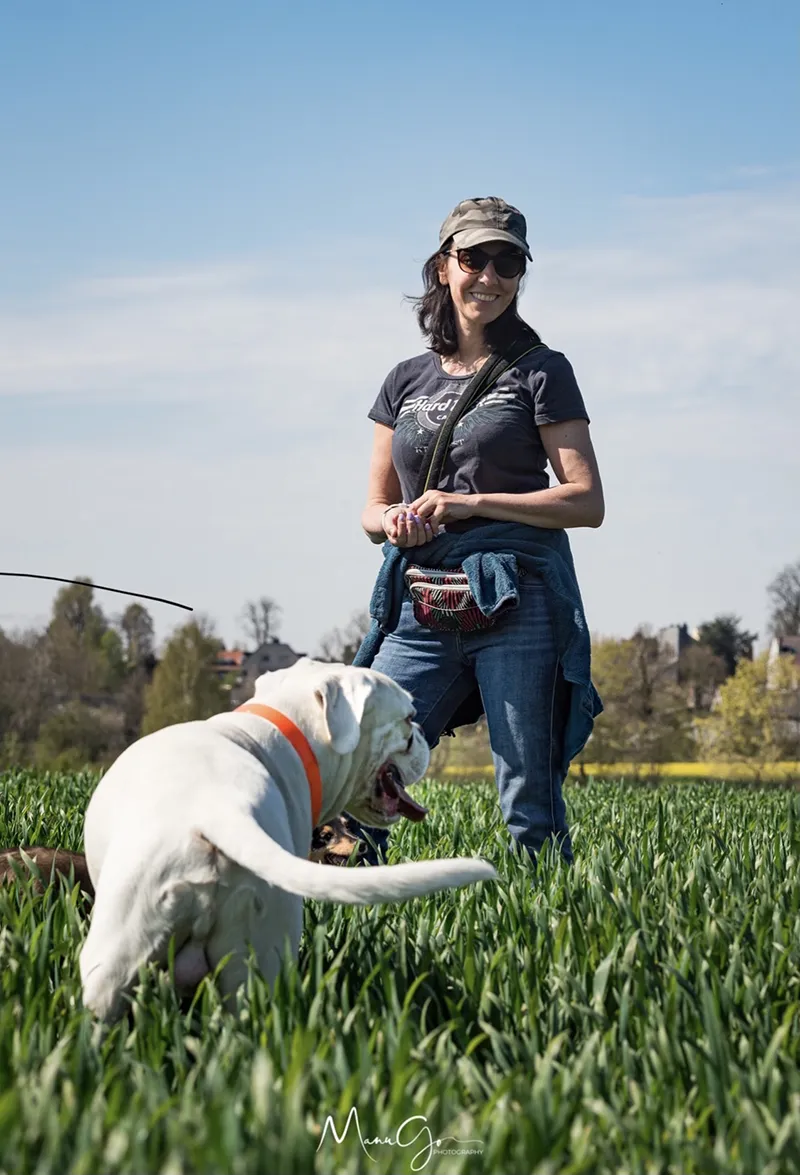
Femme debout avec un chien blanc dans un parc

My role as a dog behaviorist

Dogs and humans are two different species, and understanding each other takes time and attention. What we call "behavior problems" are in fact emotions the dog expresses in his own way: joy, excitement, a bid for attention, wariness, fear. A dog acts according to what feels good or bad to him, without any sense of right or wrong. Every dog deserves to be understood for who he is.

My job is to help you understand where this behavior comes from, why it appears in this specific context, what triggers it, and how to change it for good by listening to what your dog is telling you — so you can get back to a peaceful everyday relationship.
A serious dog behaviorist never uses force, fear, intimidation or punishment, whether physical or verbal.

Areas I cover

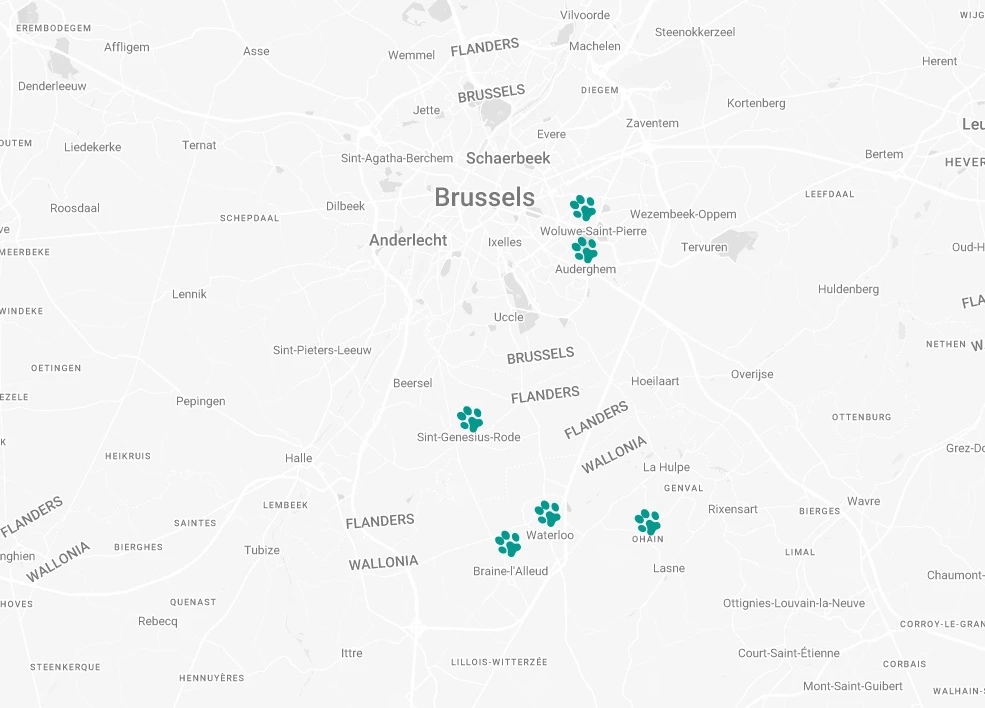
Braine-l'Alleud, Rhode-Saint-Genèse, Waterloo, Ohain, Auderghem, Woluwe-Saint-Pierre, Walloon Brabant.
Braine-l'Alleud
Rhode-Saint-Genèse
Waterloo
Woluwe-Saint-Pierre
Ohain
Auderghem
Walloon Brabant
Online sessions everywhere.
See rates by area →
Carte de la zone d'intervention autour de Bruxelles

Ethical dog behaviorism: a science-based approach, without punishment

Trained at The Victoria Stilwell Academy, ranked among the top 3 dog training schools worldwide and a pioneer of positive training, I also keep learning from international researchers and neuroscientists. My approach relies on positive reinforcement and respect for each dog's pace, with concrete advice and practical tools that fit into your life.

There is no magic wand: results promised as immediate often come from coercive methods. A positive approach sometimes takes a little more time, but the progress lasts over the long term, while respecting your dog's identity and worth.

Every consultation takes place at your place or outdoors, depending on the problem to be solved. An online consultation is also possible outside the areas I cover.
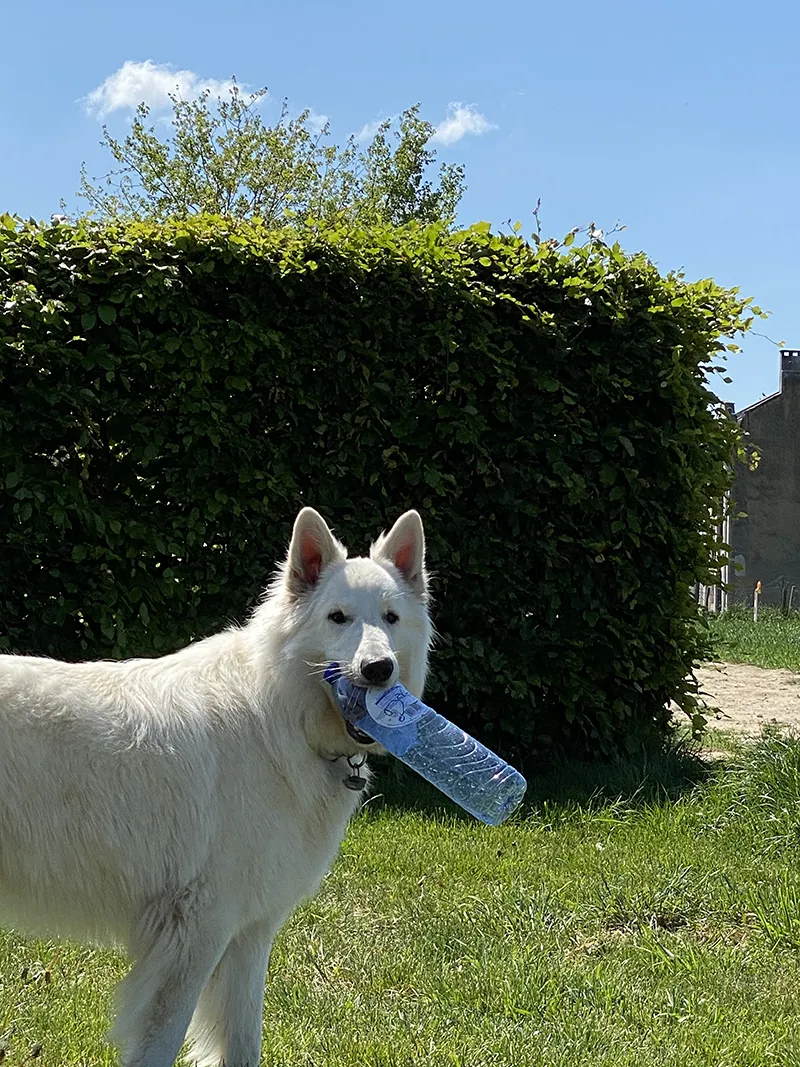
Chien blanc tenant un jouet bleu dans la gueule devant une haie
“There is no one-size-fits-all in dog training and behavior; it's all tailor-made.”

Dog behavior problems: reactivity, anxiety, aggression

I work on four main types of behavior problems, with dogs of all breeds and at every stage of life, whether puppy, adolescent, adult or senior. Some dogs show worrying signals very early, and acting early makes a real difference. That said, it is never too late to act.
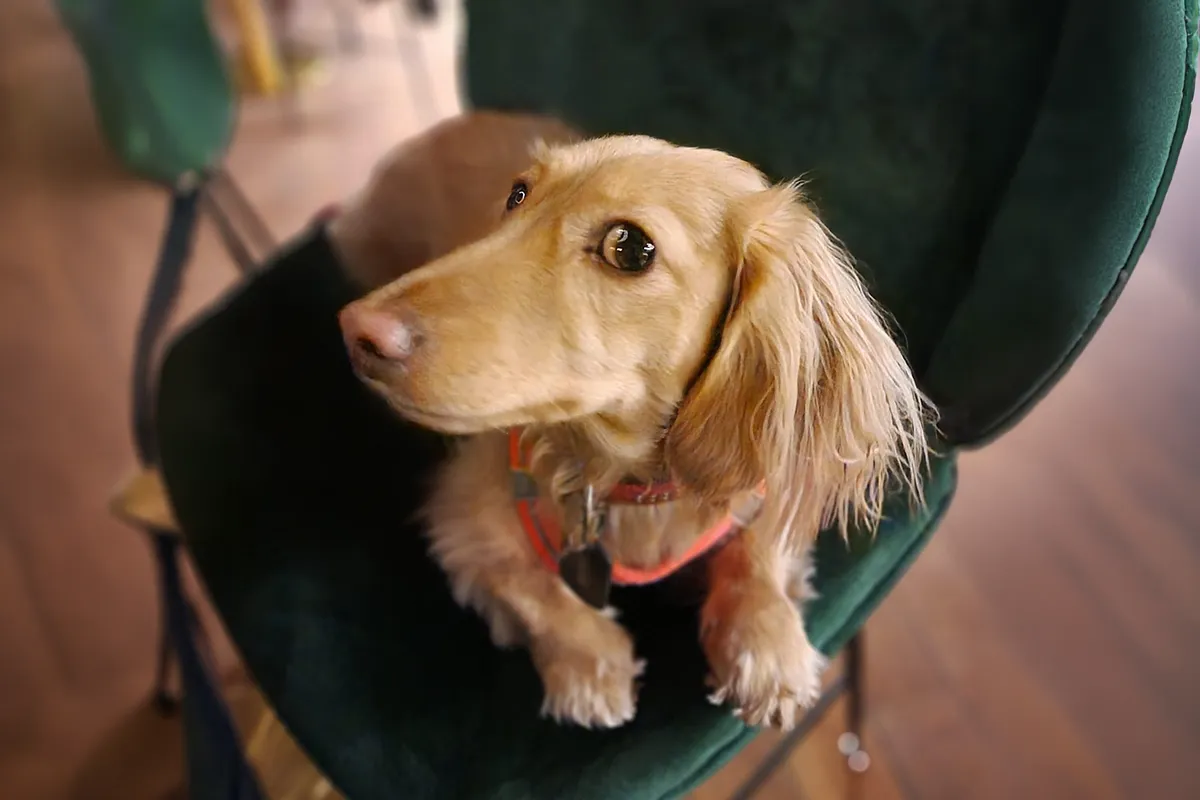
Teckel couché sur un coussin à côté d'un chat

Common behavior problems

Difficult leash walking, lack of attention, recall that needs work, nipping, destructive behavior, jumping up, excessive barking, hyperactivity... These behaviors all have a cause, and understanding it is what allows the situation to change for good. Together, during a session at your place, we identify that cause and build positive, concrete exercises suited to your daily life. My experience allows me to support owners step by step, at their own pace, whatever your dog's age or breed.
Learn more →
Teckel dans un sac de transport vert

Anxiety

Anxiety in dogs is far more common than people think. It may be genetic, linked to the dog's life experience from birth, or reflect a need for extra support in daily life — whether he is a puppy, a rescue dog or a former street dog. It shows through vocalizing, destructive behavior and sometimes physical symptoms. With clear steps, patience and consistency, your dog can learn to feel safe, even when alone.
Learn more →
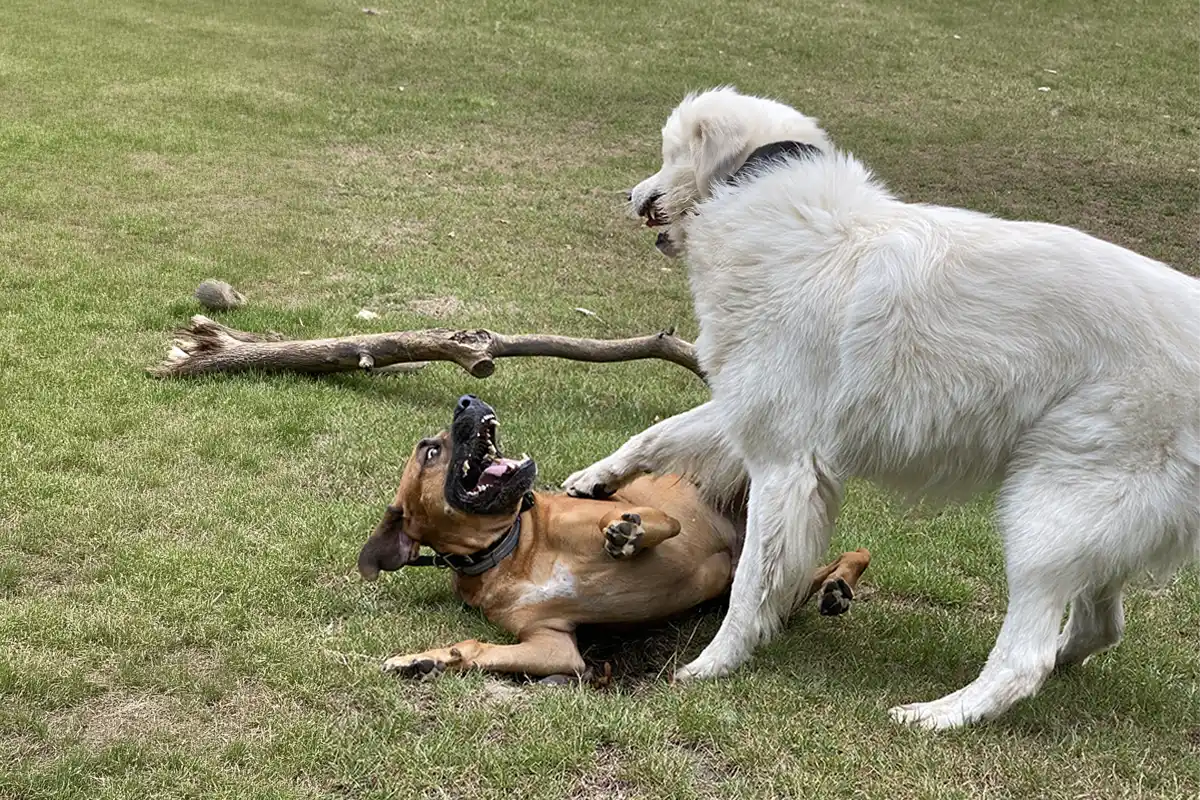
Un chien blanc joue avec un chien brun couché dans l'herbe

Reactivity

Does your dog pull, growl or bark at other dogs, people or children, or chase bikes and joggers? This reactivity, on or off leash, is sometimes genetic, but it is often a sign of fear or frustration to be turned into confidence. It can sometimes amount to a real social phobia, which is worked on with patience and gradual, positive exercises suited to your dog.
Learn more →
Berger allemand qui aboie, tenu en laisse

Aggression

A dog is often called aggressive as soon as he barks or tries to put distance between himself and another dog or a person who frightens him. Understanding the origin of the behavior — whether it is predatory instinct or a defensive reaction — makes it possible to decode the dog's warning signals through a careful reading of his body language, and to respond early, with positive methods. Simply respecting the dog's personal space and limits already changes a great deal.
Learn more →

Behavior sessions: how it works and rates

01

First contact, 10 min
Free

We talk by phone or in writing: you describe your dog's situation, his living environment and what you expect. No commitment.
02

Behavior assessment
€95

I come to your home. Over 1h30, I observe your dog in his environment, gather his history and analyze the communication going on between you. No judgment, just a high-quality professional reading and concrete advice you can apply that very evening. This is the session where I recommend a number of sessions to reach your goals.
03

Personalized management and training plan
€65
(optional but very useful!)

I give you a consultation report several pages long. In it, I summarize our consultation: observations of your dog, his environment, his background, a description of the problem and how to overcome it. You will also find a tailor-made protocol, adapted to your dog's profile and your pace of life. Every exercise is explained and justified. As a bonus, I include around ten scientific publications on the issue at hand, along with reading that may help you.
04

Post-consultation follow-up
Free

A 15-minute call is offered within 2 weeks of the consultation.

What makes the difference

At your place
Where the problems actually occur. No trip to an unfamiliar center for your dog.
No punishment, ever
A 100% positive method, with total respect for your dog. Ethics and animal welfare are the watchwords of the profession I love. No coercive tools, no intimidation.
Follow-up included
A complimentary call within 2 weeks. I remain available to answer your questions. You reach me directly online, with no secretary in between.

FAQ — Dog behaviorist

A dog trainer works on teaching new behaviors, what I call safety behaviors: sit, down, stay, wait, recall, socialization, house rules.

I step in when something is wrong, when the dog is suffering or reacting in a way that worries you. The two approaches are complementary, and I am certified in both fields.

→ Learn more about dog training

Yes, and that is precisely where they make the difference. Punitive methods suppress the visible symptom without addressing the cause, and often make the underlying fear worse. Positive training understands what triggers the behavior and how to redirect it.
It depends on the problem, how long it has been going on, your dog and your time. I give you a clear estimate during the assessment, with no commitment. Some cases improve significantly from the very first session; others require longer follow-up.
No. A dog's brain remains plastic throughout his life. An adult or senior dog can absolutely learn new behaviors and regain his calm, provided the pace and approach are adapted to his profile.

As the founder of The Dog Nanny, I first offered dog walking services in Brussels: pure happiness for the dogs, who got to meet their friends and run free in suitable areas.

After 14 years of daily dog walking in contact with free-running packs, I felt the need and the desire to learn more about the animal I love.

Since my certification at The Victoria Stilwell Academy (USA, 2022), I have continued to train with the world's leading specialists, all in the top 10 of the best dog professionals, such as Prof. Kathy Murphy, veterinarian and PhD in Neuroscience, Dr. Andrew Hale, Michael Shikashio, aggression specialist, Zak George, Marc Bekoff, ethologist, Laura Donaldson, canine trauma specialist, and Simone Mueller, predation specialist, among others.

I am currently completing an online graduate program in canine ethology at Harvard. I am a professional member of The Victoria Stilwell Academy for Dog Training & Behavior, The Pet Professional Guild and the IAABC.

→ Learn more about my background

In Belgium, as anywhere else in the world, the title is not legally protected, which means anyone can claim it without serious training. To practice credibly, you need a recognized, certifying positive training program, solid foundations in ethology and modern behavior science, and supervised practice.

That is the path I followed myself, with a certification from The Victoria Stilwell Academy (USA) and continuing education with the world's leading specialists. If you would like to get started in this field, a robust positive dog training course is an essential first step: that is precisely what The Dog Nanny Academy offers, in person and online.

→ The Dog Nanny Academy

Your dog is talking to you.
Let's learn to listen.

map-markerlaptoparrow-upplus-circle